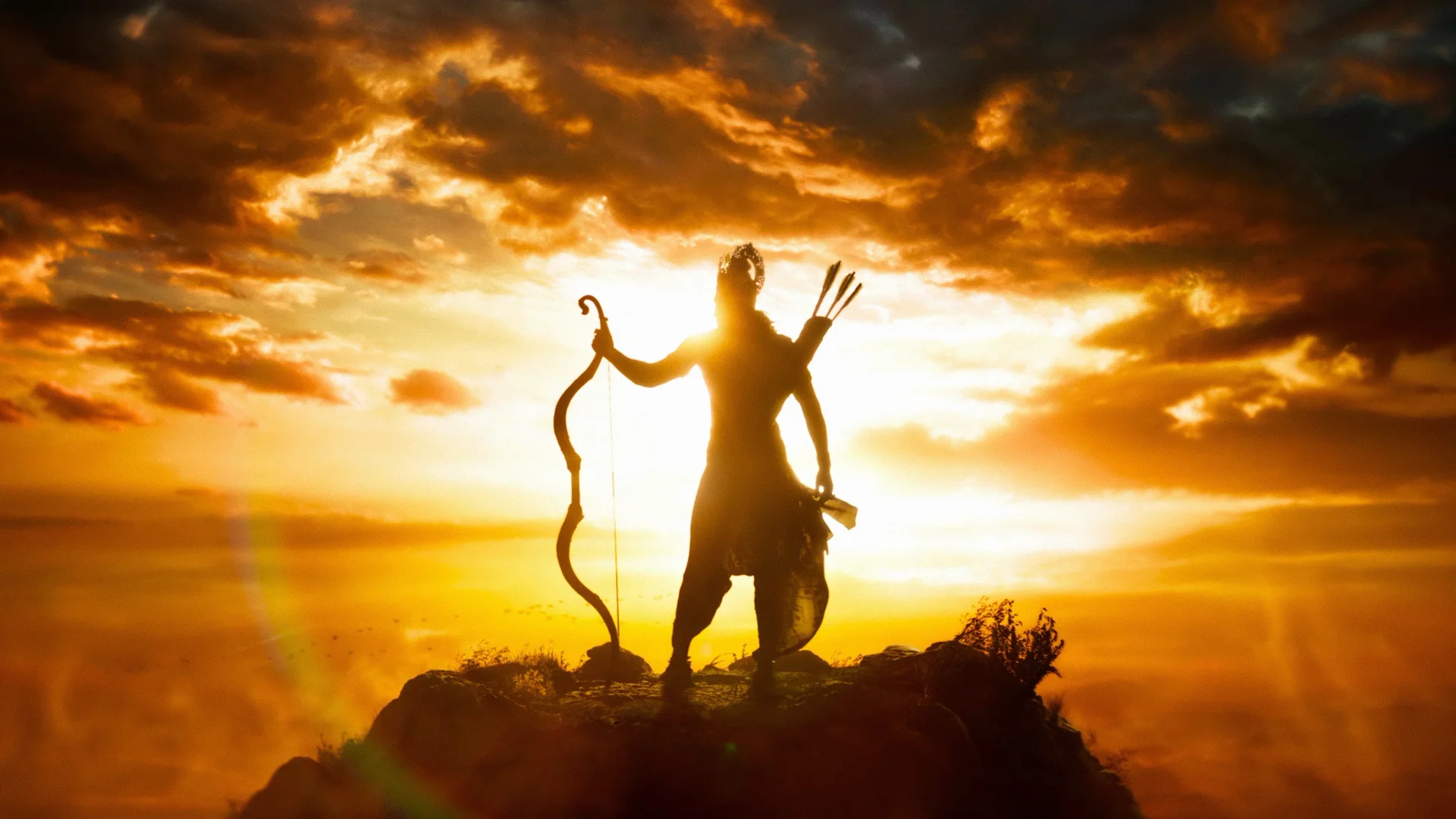
Ramayana – A Spectacular Cinematic Experience

KalkiLVL 2
9d ago· edited·0 replies
Ramayana is not trying to compete with Hollywood. It is building its own world – and for the most part, it succeeds. I watched Ramayana in cinemas on 9 November 2026 during an evening screening. Judging by the reactions around me, the audience was genuinely moved – there were even moments of quiet sadness during two particularly spectacular scenes that were as emotionally resonant as they were visually breathtaking.
The Spectacle
The story is immediately compelling – not despite its familiarity, but because of what this production does with it. From the richly layered lighting and colour palette to the beautifully crafted world, the sheer scale of production, the magnificent bird Jatayu, and a leading cast that more than holds its own – including strong supporting turns from Lara Dutta and Ravi Dubey as Lakshman – the film gives you far more to take in than you might have anticipated. The battle sequences were magnificent, the visual effects outstanding, and the overall presentation truly impressive. Ramayana does not invite comparison with other films. It exists on its own terms, both visually and thematically – even if certain scenes occasionally bring others to mind.
The Characters
The film's greatest strength and its most interesting tension both live in its characters. Ranbir Kapoor's performance as Ram is solid. The film gives him two moments that say more about who Ram is than any line of dialogue could. The first is the exile scene: as Ram, Sita and Lakshman leave Ayodhya, the city behind them is draped in a cold, sorrowful blue – while the three of them walk forward in warm golden light. It is as though the light itself is departing with them. A single image that captures everything Ram represents without asking him to say a word. The second comes near the film's end, when Ram performs the last rites for Jatayu – a noble soul who gave his life trying to protect Sita. Ram has just learned of her abduction. He is in his darkest moment. And yet he stops. He honours the fallen with the full dignity they deserve. That quiet act of gratitude, in the depths of grief, is Ram at his most human – and his most divine. Yash's portrayal of Ravana is a genuine highlight. The time invested in developing his backstory, motivations and personality pays off in full. He made evil interesting to watch – compelling without making sympathy feel obligatory – and that is not an easy thing to achieve.
Where It Falls Short
Given the enormous budget and scale of this production, I would have expected the battle sequences to be considerably longer. And while the computer-generated characters were largely convincing, there were occasional moments where the visual quality noticeably dropped, breaking the immersion entirely. There is something the film never quite achieves with Ram: the sense that his restraint is a choice. His humility, compassion and calm are not weaknesses – they are what define him as an extraordinary figure. But a compelling portrayal of Ram requires that stillness to feel inhabited, not empty. Even in his quietest moments, you should sense an immense force consciously held back – so that when he finally acts, the weight of that action carries everything that came before it. The film brings the gentleness. What it rarely brings is the feeling that something immense lies beneath it. The same applies to Sita. The film introduces her as a warrior – and then forgets it made that choice. What is particularly interesting is how this imbalance plays out structurally: Ravana's character is fully realised from the start, while Rama's journey only truly begins to take shape towards the end. I suspect – and hope – that his character will come fully into its own in the second part.
The Music
Hans Zimmer and A. R. Rahman have delivered something extraordinary here. The challenge they faced was immense: a film aimed at both Indian and international audiences, where the music had to carry the weight of both worlds at once – devotion and grandeur, intimacy and spectacle. They met that challenge. The Rama Theme is my personal highlight – woven into the film with remarkable intelligence and emotional precision, it lingers long after the credits. If there is one moment that did not fully land for me personally, it is Ravana Tandav – though I recognise the ambition behind it. With composers of this calibre, perhaps the only real problem is that they make you want even more.
Final Verdict
I can confidently say that I was thoroughly entertained for the vast majority of its runtime. Despite its shortcomings, I would wholeheartedly recommend it – this is precisely the kind of film that deserves to be seen in a cinema, if only for the scale, the grandeur, and the sheer ambition on display. Ultimately, Ramayana succeeds in making me genuinely curious about what comes next – while leaving me with even higher expectations for it. If there is one thing I would want from the second instalment, it is simply this: more. More spectacle, more intensity, more breathtaking battles, more emotional depth, and more of everything. My personal rating: 7/10. This review reflects my personal experience of the film – not a verdict on its accuracy to the original story.